
Needle, thread and fine stitches
Sewing, knitting, crocheting, embroidery, model making, crafting: hobbies in which you look at small things for hours. A magnifying lamp turns that into relaxed work instead of strained looking – and incidentally extends how long you can keep going in one sitting.
The basics of lens strength are covered in detail in Focal length, magnification and working distance and in Which diopter suits you? – this article is about what makes this particular application special.
Which strength suits which hobby?
| Activity | Recommendation |
|---|---|
| Knitting, crocheting, sewing | 3 diopters – a large field of view, you keep the whole row in sight |
| Embroidery, cross stitch | 5 diopters – individual stitches clearly visible |
| Model making, miniatures | separate guide: Lighting for model making & miniatures |
| Finest detail painting | 8 diopters |
A rule of thumb from many advisory conversations: choose the strength for the finest work you do regularly – not for the finest you have ever done. A lens that is too strong forces you to work uncomfortably close.
Where should the lamp go?
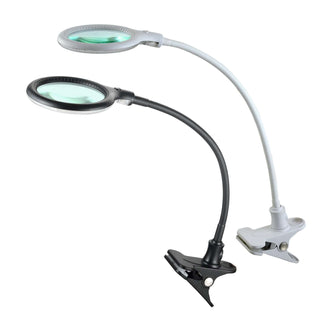
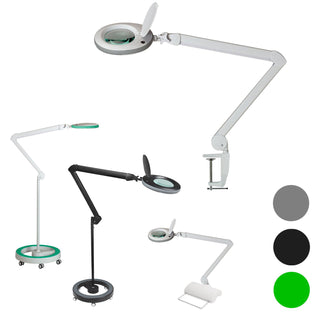
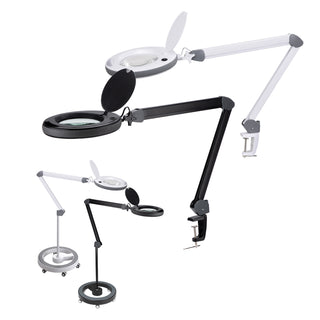
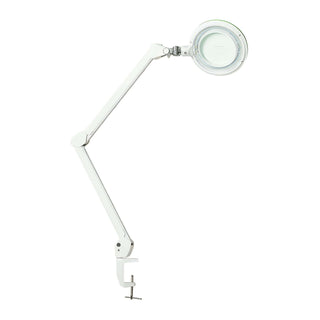
Table clamp at a permanent craft spot – inexpensive and stable. Roll stand if you sometimes work at the table and sometimes in an armchair; the lamp can simply be pulled over. Articulated arm if you often change position and want to swing the lamp aside in between.
Suitable Lumeno models for needlework
The Lumeno 851X with a 152 mm real glass lens gives you the wide field of view needed to keep chart and work in sight at once – dimmable, in 3 or 5 dioptres. At a small sewing station the 680X clamp lamp with 550 lumens is enough. All models in the overview of LED magnifying lamps.
Frequently asked questions
Can I work with needle and thread underneath the lamp?
Yes – that is what the working distance is for. At 3 diopters you have the most room between lens and workpiece; at 8 diopters it becomes tight.
Does the lamp get warm?
LED models stay hand-warm even after hours – unlike earlier versions with a fluorescent tube.
Is it worth it compared with a hand magnifier?
If you work for longer than a few minutes at a time: yes. Both hands stay free, the distance stays constant, and the light that comes with it is usually the bigger gain, more so than the magnification itself.

0 comments